Showing posts with label banska bystrica. Show all posts

Saturday, 11 July 2026

Business Integration: The Strategic Blueprint for Unified Enterprise Operations


Business Integration: The Strategic Blueprint for Unified Enterprise Operations

In the modern corporate ecosystem, data and operational silos are the silent killers of growth. Businesses frequently deploy a mosaic of specialized software, hire isolated departmental teams, and manage disjointed communication channels.
While each individual system might perform well on its own, a lack of connection creates a fragmented infrastructure. This fragmentation triggers manual data-entry errors, delayed decision-making, and escalating overhead costs.
The definitive solution to this modern operational bottleneck is Business Integration. This is the strategic process of unifying disparate technological systems, internal processes, and data pipelines into a single, cohesive operational engine. Here is a comprehensive guide to how modern organizations architect a fully integrated enterprise.

1. System Integration: Unifying the Modern Tech Stack
A professional business integration strategy starts at the architectural layer. Your software platforms must communicate in real time without human intervention.
  • API-First Architecture: Move away from manual data entry and disjointed spreadsheets. Utilize advanced Application Programming Interfaces (APIs) to bridge the gap between your Customer Relationship Management (CRM) system, Enterprise Resource Planning (ERP) platform, and core accounting software.
  • The Single Source of Truth: When your systems are perfectly synchronized, a change in one platform instantly propagates across all others. For instance, when a sales representative closes a deal in your CRM, the integration engine automatically updates inventory counts in the warehouse and generates an invoice in the accounting ledger.

2. Process Integration: Harmonizing Cross-Departmental Workflows
Business integration is not purely a technological challenge; it requires a radical realignment of how your human capital operates.
  • Eliminating Functional Silos: Standard corporate structures isolate sales, marketing, customer success, and product development teams. Process integration aligns these departments around unified goals and shared metrics, such as Customer Acquisition Cost (CAC) and Lifetime Value (LTV).
  • Automated Workflow Triggers: Design seamless handoffs between teams using workflow automation tools. When marketing captures a high-value organic lead, the integration pipeline automatically scores the prospect and assigns it to the ideal account executive, maximizing conversion velocity.

3. Data Integration: Powering Real-Time Business Intelligence
Data is the most valuable asset your enterprise owns, but it loses its utility if it is trapped inside disconnected departmental databases.
  • Consolidated Data Warehousing: Implement a centralized data warehouse or Customer Data Platform (CDP) to ingest, clean, and store data from every customer touchpoint, marketing campaign, and product metric.
  • Algorithmic Decision-Making: By integrating your data streams, your executive leadership team can build comprehensive business intelligence dashboards. This grants real-time visibility into net profit margins, operational bottlenecks, and shifting market demands, allowing you to pivot before your competitors do.

4. Governance, Security, and Compliance
As you connect various data networks and internal processes, your potential exposure to security vulnerabilities naturally expands. True integration requires strict operational oversight.
  • Zero-Trust Network Access: Enforce a rigorous security framework across your integrated systems. Every API connection, internal software tool, and user account must continuously authenticate and authorize data transfers, applying the principle of least privilege.
  • Regulatory Compliance: Ensure your automated data-sharing processes strictly adhere to global privacy frameworks, such as GDPR or CCPA. All customer data must be encrypted both "at rest" within databases and "in transit" across your network pipelines.

The Executive Summary
Business Integration represents the transition from short-term tactical operations to long-term systemic efficiency. By locking in an API-first software architecture, breaking down departmental communication barriers, consolidating disparate data streams, and enforcing ironclad zero-trust security, you build a resilient, scalable commercial engine ready to capture market share.

UNISOL SLOVAKIA s.r.o.: Your Trusted Partner for Advanced Industrial Solutions and Engineering

UNISOL SLOVAKIA s.r.o.: Your Trusted Partner for Advanced Industrial Solutions and Engineering

UNISOL SLOVAKIA s.r.o.: Your Trusted Partner for Advanced Industrial Solutions and Engineering

In today's fast-paced commercial manufacturing sector, businesses are constantly searching for strategic partners who can effortlessly bridge the gap between technical expertise and logistical flexibility. Within the Central European market, UNISOL SLOVAKIA s.r.o. has firmly established itself as a premier destination for high-quality industrial components, custom engineering solutions, and operational stability.
As a modern, technology-driven enterprise, UNISOL SLOVAKIA s.r.o. focuses entirely on optimizing the performance, safety, and cost-efficiency of manufacturing facilities. By blending deep technical insight with global quality standards, the company helps industrial plants streamline production lines, reduce technical debt, and eliminate expensive equipment downtime.

1. The Core Portfolios of Industrial Excellence
UNISOL SLOVAKIA s.r.o. does not rely on a rigid, one-size-fits-all product catalog. Instead, the company’s market power stems from a highly diversified service structure engineered to support heavy machinery, automotive assembly, energy infrastructure, and precision engineering.
  • Premium Component Distribution: The company manages a robust supply chain network, distributing certified industrial components from the world's most reliable manufacturers. This guarantees long-term durability and absolute compliance with European safety regulations.
  • Technical Engineering Consultation: UNISOL SLOVAKIA s.r.o. operates as an active extension of your internal engineering team. Experts evaluate your existing machinery layouts, analyze structural stress points, and recommend technological upgrades before you make capital investments.
  • Supply Chain Harmonization: Plynulost (continuity) of supply is critical for production floors. UNISOL SLOVAKIA s.r.o. deploys flexible, predictive logistics frameworks to ensure that crucial wear-and-tear parts arrive precisely when needed, completely bypassing traditional bottleneck friction.

2. Agile Customization and Customer-First Alignment
A primary differentiator for UNISOL SLOVAKIA s.r.o. is its ability to rapidly adapt to highly irregular or non-standard technical blueprints.
  • Bespoke Technical Integration: Every factory floor features a unique structural legacy. The engineering team at UNISOL SLOVAKIA s.r.o. designs custom adapters, fittings, and component configurations that bolt seamlessly into your existing hardware layout.
  • Rapid-Response Support Architecture: In the world of industrial production, a single hour of an offline assembly line can trigger thousands of Euros in losses. The company prides itself on a rapid communication pipeline, processing technical queries and dispatching product quotes in record times.

3. Merging Local Presence with Global Standards
While UNISOL SLOVAKIA s.r.o. is deeply rooted in the Slovakian industrial landscape, its operational methodologies strictly adhere to high-level international benchmarks.
  • Boosting Regional Competitiveness: By introducing state-of-the-art automation and high-durability materials to local factories, the company elevates the overall manufacturing capability of the region, allowing domestic brands to compete strongly on a global scale.
  • Eco-Efficient Industrial Progress: Modern engineering must respect resource boundaries. UNISOL SLOVAKIA s.r.o. prioritizes energy-efficient components and optimized material wear profiles. This actively lowers the carbon footprint and energy consumption of your daily operations.

The Executive Summary
Partnering with UNISOL SLOVAKIA s.r.o. means investing in the long-term reliability of your commercial infrastructure. Through their combined offering of precision component supply, proactive engineering advisory, and hyper-reliable logistics, they transform traditional factory challenges into smooth, predictable, and highly profitable operational pipelines.

Tuesday, 11 March 2025

Few Good SecurityReasons Why We A Push for Safe and Simple Business Prefference In Growth


Few Good SecurityReasons Why We A Push for Safe and Simple Business Prefference In Growth

Security play a pivotal role in the European Union's financial markets and overall economy. These financial instruments enable the efficient channelling of funds from capital markets into various projects, thereby promoting economic growth. Furthermore, they serve as a mechanism for redistributing risks throughout the financial system, which can enhance stability and resilience.

For banks, securitisations are particularly valuable in managing credit and concentration risks. By repackaging loans and other receivables into tradable securities, banks can diversify their risk exposure and make it easier to attract investment. This process allows them to lower their capital reserves, as they can reduce the amount of regulatory capital they are required to hold against potential losses. Hence, banks often utilize securitisation strategies both for regulatory compliance and to bolster funding capabilities.

However, the potential benefits of securitisations come with significant caveats. If these instruments are not effectively managed, they can introduce severe risks to individual banks as well as the broader banking sector. The global financial crisis of 2007-09 is a stark reminder of these dangers, where mismanaged securitisations contributed to systemic failures.

Regulatory frameworks dictate that banks can only reduce their capital requirements when a satisfactory "significant risk transfer" (SRT) has occurred. This means that the bank must demonstrate that the securitisation effectively transfers a substantial portion of the risk to third parties. A positive SRT assessment from the competent supervisory authority is crucial; it establishes that the associated risks have genuinely been transferred and will not revert to the originating bank throughout the lifecycle of the securitisation. This regulatory oversight is essential to ensure that securitisation processes contribute to stability without compromising the integrity of the financial system.


European Central Bank Fast Track  Of  Supervisory Assessment

Over the past year, the European Central Bank (ECB) has initiated a fast-track process aimed at expediting the supervisory assessment of Securitisation Risk Transfer (SRT). This initiative has been developed in close collaboration with stakeholders, particularly the European Banking Federation, to create a more efficient regulatory environment for securitisation transactions.

Currently, the assessment period for an individual securitisation transaction under SRT stands at approximately three months. The goal of the fast-track process is to significantly reduce this timeframe for certain straightforward securitisations that meet specific eligibility criteria. By leveraging product standardisation and implementing harmonised templates, supervisors can streamline their evaluations, ultimately facilitating a more rapid approval process for qualifying transactions.

However, for more complex and innovative securitisation structures, the ECB remains committed to maintaining a rigorous assessment process. These transactions will undergo detailed scrutiny to ensure that they achieve a meaningful transfer of risk, crucial for maintaining the integrity of the financial system. This approach reinforces the principle that efficiency in processing should not come at the expense of resilience and regulatory compliance. Fast-tracked transactions will still be evaluated against all relevant provisions of the existing regulatory framework, ensuring that safety measures are upheld.

The ECB plans to test this new fast-track process during the first half of 2025. This testing phase is vital as it will assess whether the revised process delivers the anticipated benefits, such as further simplification and increased standardisation in the securitisation landscape. Additionally, it will evaluate the adequacy of the eligibility criteria and the usability of the templates introduced as part of this initiative.

As a critical step, it is now incumbent upon banks to actively pursue simple securitisation transactions. Their participation is essential for the successful implementation and widespread adoption of the fast-track SRT process, ultimately aiming to foster a more efficient and robust banking and financial system.


Banks Are Monitoring Individual Activities And Transactions

The review of individual transactions involving securitisation will be supplemented by comprehensive ex post checks and ongoing monitoring of banks' securitisation activities. This effort aims to enhance oversight and ensure compliance with regulatory standards.

The European Central Bank (ECB) expects banks to effectively manage the risks associated with their securitisation operations and to seamlessly integrate these risks into their internal governance frameworks and operational processes. This encompasses a variety of practices, such as conducting rigorous stress testing scenarios and ensuring that securitisation activities are considered in capital planning and risk management strategies.

A crucial aspect of the ECB’s assessment involves understanding the ultimate risk bearers within these transactions and determining whether these risks are managed adequately. For instance, if banks extend leverage to credit funds that engage in securitisation, it may lead to considerable hidden risks lingering within the banking system, which can depress overall capital coverage.

Such scenarios raise significant prudential concerns, as they may expose banks to greater levels of risk than anticipated. Therefore, banks are mandated to clearly identify and mitigate risks associated with their connections to securitisation investors.

Furthermore, the ECB will persist in monitoring market trends and developments to identify any negative patterns or harmful behaviors early on, thereby safeguarding the financial system. To enhance transparency and accountability, the ECB advocates for improved reporting and disclosure standards for non-bank financial institutions.

These enhancements will not only facilitate the detection of interconnectedness arising from securitisation activities but also contribute to a more robust regulatory environment that promotes financial stability.


Contribution Of The European Commission’s Targeted Consultation

The implementation of simple securitisation products has the potential to significantly enhance the securitisation market, as emphasized in the European Central Bank’s (ECB) staff contribution to the European Commission's targeted consultation regarding the efficacy of the EU securitisation framework.

For the long-term growth and stability of the market, it is crucial to achieve a genuine transfer of risk away from the banking sector toward a more diversified investor base capable of effectively managing those risks.

Adopting simple and standardised securitisation products can ease market development, promote financial stability, and attract new investors. Unlike complex securitisations that feature intricate structures, which may be designed to maximize the profitability of individual transactions, these simpler products streamline processes and reduce the burden on banks, investors, and regulatory supervisors.

The convoluted nature of complex securitisations not only ties up valuable resources but also fails to offer any substantial advantages to the financial sector or the broader economy. Furthermore, they complicate the monitoring process, which can lead to unforeseen risks creeping into the financial system, thereby undermining overall financial stability and the effective functioning of markets.

By fostering a clearer and more transparent environment, simple securitisation products can enhance investor confidence and contribute to a more resilient financial ecosystem.

Monday, 3 February 2025

Cheap Accommodation Deals For Travellers Is Known As Apartman NA OBRAZE

 Cheap Accommodation Deals For Travellers Is Known As Apartman NA OBRAZE


Information About Service Provider And Facility

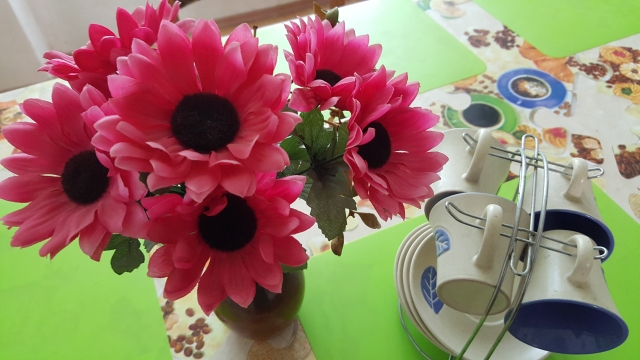
Experience a delightful stay in the heart of the village at our inviting two-room apartment, housed in a building with its own private entrance and charming yard. For your convenience and peace of mind, we offer complimentary parking protected by a sturdy steel fence, ensuring that you and your vehicle can feel safe and secure throughout your visit.

This spacious apartment comfortably accommodates up to 8 guests, making it perfect for families or groups. The well-appointed kitchen with featuring a gas stove for cooking, a microwave for quick meals, a refrigerator equipped with a freezer compartment for your perishables, and an electric kettle for those cozy cups of tea or coffee.

The living area is designed for relaxation, complete with a television for entertainment and complimentary high-speed internet access, allowing you to easily connect your laptop and stay in touch with the outside world. The bathroom is thoughtfully arranged with a refreshing shower, a separate sink for added convenience, and a private toilet.

For climate comfort, the apartment is equipped with electric heating as well as a traditional solid fuel stove, providing warmth during cooler evenings. Step outside to the inviting yard, where a cozy seating area awaits you, perfect for morning coffee or evening relaxation. Enjoy outdoor cooking with the portable grill available for your use.

Importantly, the yard is exclusively reserved for guests of the apartment, ensuring that you can enjoy complete privacy during your stay without the presence of hosts. Whether you’re looking for a quiet getaway or a fun-filled retreat, our apartment offers the ideal setting for a memorable experience.

Cheap Accommodation Deals For Travellers Is Known As Apartman NA OBRAZE


Basic Information About Destination And Place

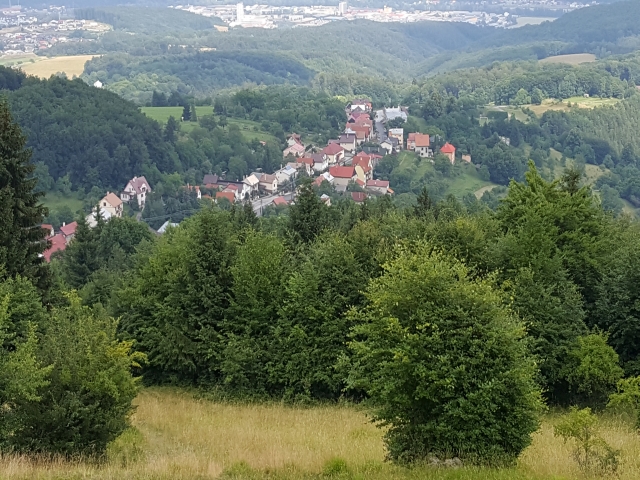
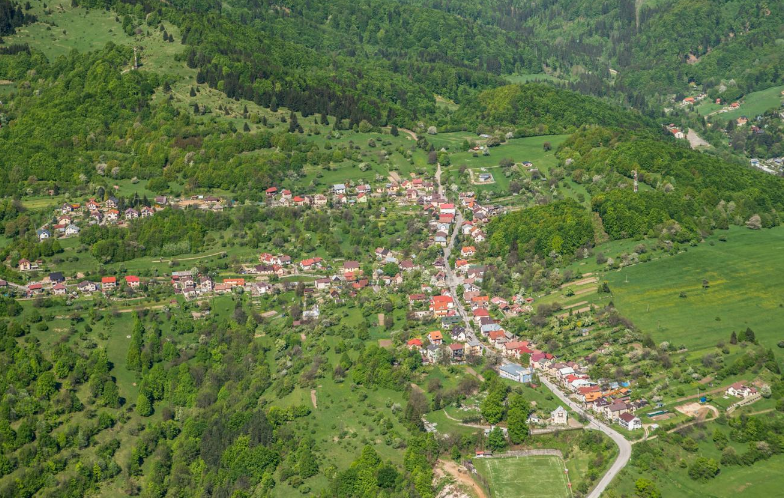
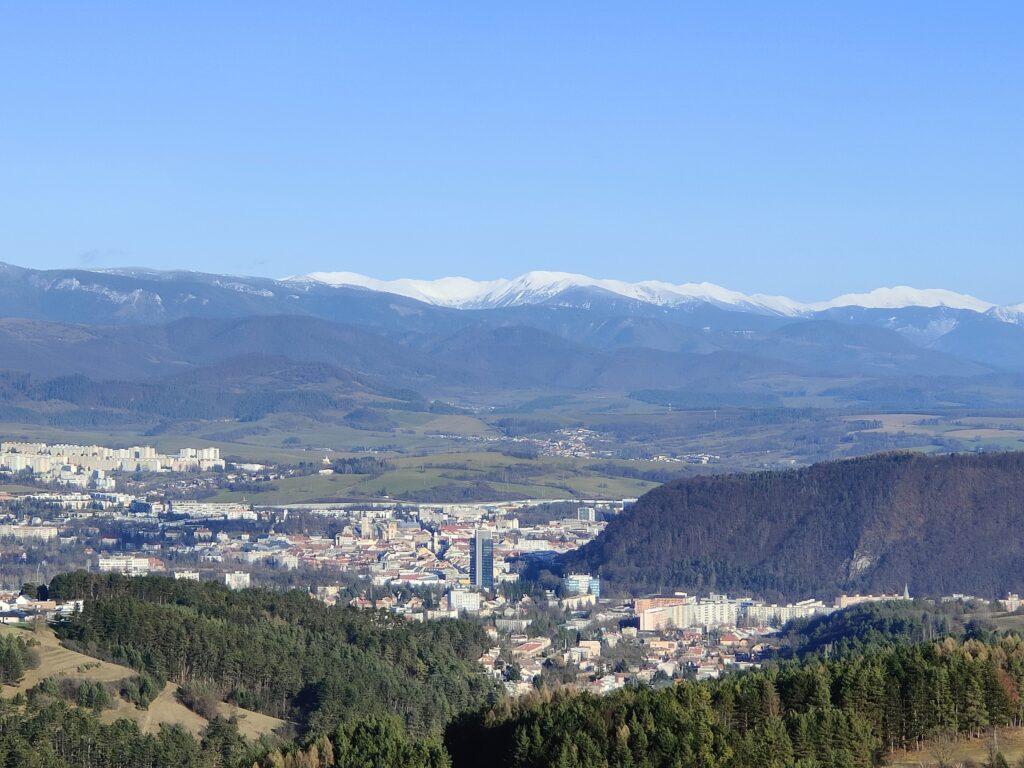
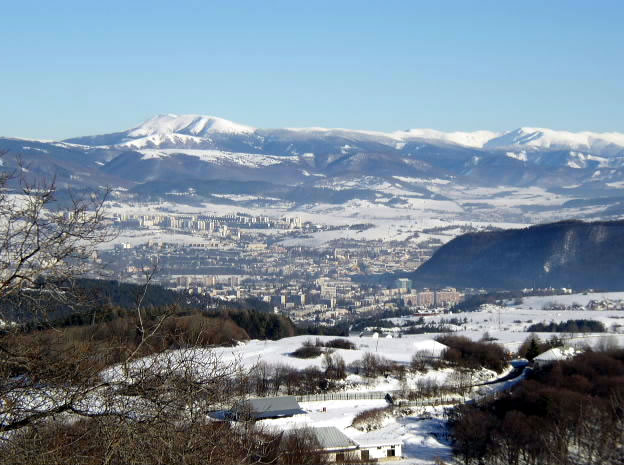
The earliest recorded mention of the settlement currently known as Horné Pršany can be traced back to documents from 1407, in which it was referred to as Persen. Throughout the centuries, the name has undergone several transformations, including Persan, Prssan, Persiny, and Prschen, before being officially designated as Horné Pršany in 1920. Located merely ten kilometers from the bustling center of Banská Bystrica, and even closer to its residential area of Radvaň, Horné Pršany retains a distinctly rural character, largely untouched by the urban influences of the nearby city.


A notable entry from a local chronicle dated 1928 suggests that the village likely derived its name “Pršany” from the region’s frequent rainfall, a prominent feature affecting life in this tranquil area. Interestingly, despite its verdant surroundings, Horné Pršany lacks any natural streams or rivers within its boundaries.

In recent years, the demographic profile of Horné Pršany has exhibited relative stability, with the population fluctuating between 380 and 400 residents. The limited availability of new construction plots has led many individuals and families, in search of the serene countryside lifestyle combined with proximity to essential public services, to pursue the purchase and refurbishment of older homes.

Furthermore, access to the village provides a unique experience, as every approach necessitates a gradual ascent, given that Horné Pršany is situated at an elevation of 635 meters above sea level. In comparison, the nearby town of Urpín lies at a lower elevation of 362 meters, thus underscoring the elevated tranquillity characteristic of this quaint village.

Cheap Accommodation Deals For Travellers Is Known As Apartman NA OBRAZE


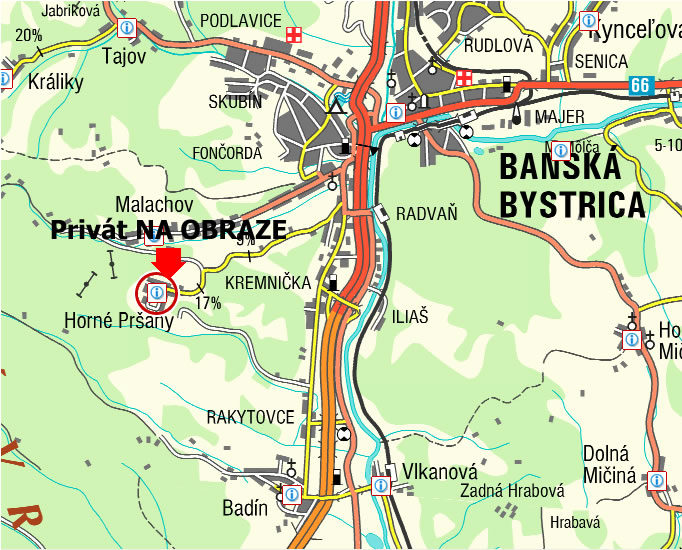
Location According To Map For Apartman NA OBRAZE

To obtain the most accurate information for your travels, it is highly advisable to utilize Google Maps as your primary navigation tool when traveling to Horné Pršany, a picturesque village situated in the Banská Bystrica region of Slovakia. Furthermore, various other mapping applications and services are available that can direct you to this location, facilitating a convenient travel experience.


For those who prefer traditional navigation methods, it is recommended to carry a paper map. This approach can provide reliable guidance and enhance the overall travel experience by enabling one to become more familiar with the surrounding landscape. Despite the advancements in digital technology, many travelers find that employing a topographical map in conjunction with a compass offers a gratifying and adventurous means of navigating the beautiful terrains of Slovakia.

For individuals planning their journey, Horné Pršany is located at the coordinates 48°42′N 19°05′E, which can be readily entered into any mapping software to assist in determining the route. Should you require assistance in reaching Horné Pršany, Google Maps can furnish detailed, step-by-step directions from the nearest public transportation stations, ensuring a seamless transition to this tranquil destination. Nonetheless, it is worth noting that several alternative navigation applications also provide excellent guidance, thus it is prudent to explore various options available.

In conclusion, while modern technology is readily accessible, it is beneficial to integrate it with the time-honored technique of using a paper map and compass for a comprehensive and fulfilling travel experience to Horné Pršany, Banská Bystrica, and the captivating regional areas of Slovakia.

Cheap Accommodation Deals For Travellers Is Known As Apartman NA OBRAZE


Historical Information About Place Horne Prsany

In 2007, the village commemorated the 600th anniversary of its first recorded mention, which appeared in historical documents as follows: Persen in 1407, Persan in 1447, Prssan in 1467, Persiny in 1560, Prschen in 1786, and Prcsany and Felsópercsény in 1808, ultimately culminating in the designation Horné Pršany in 1920.


The village maintains a chronicle that began recording events in 1928. This chronicle indicates that the residents have possessed a bell tower since 1757; however, there is a lack of written documentation, with evidence existing solely as oral tradition. The bell tower in Horné Pršany is recognized as a historical artifact, housing a late Baroque bell attributed to an unknown creator, which is classified as a cultural monument and also dates back to 1757. At the time of its inception, the bell was nonfunctional due to a crack and requires reconstruction. The Slovak Evangelical Unity operated within the village, acquiring a new bell that was consecrated on August 20, 1939, as part of a religious service. According to the local chronicle maintained by teacher Čief, the village derives its name, Pršany, from its frequent rainfall.

Cheap Accommodation Deals For Travellers Is Known As Apartman NA OBRAZE


The territory of Horné Pršany likely experienced settlement prior to its official documentation. This assertion is supported by archaeological research conducted by Dr. Balaš in the Medzihrádky locality. Additional evidence suggesting the antiquity of Horné Pršany is the existence of Dolné Pršany, a section of Malachov documented as early as 1327, implying that Horné Pršany must also have been present. Furthermore, a settlement connected to the Lusatian ash-pit field culture was discovered in Horné Pršany at the Hrádok leucolith. During archaeological investigations between 1901 and 1903, Samuel Petrikovich uncovered various iron tools, pieces of iron, and pottery. In 1956, an iron knife measuring 13 cm in length and iron forging artifacts were also recovered.


The development of life in mining towns was predominantly attributed to the influx of German colonists during the 13th century, a period during which mining and its associated activities experienced significant growth in the region. Charcoal emerged as a crucial resource for smelting ores in smelters and forges, and the abundant forests provided ample wood. Notably, the founders of the coal mining settlement in Pršany overlooked the lack of a substantial water source. The community sustained itself through coal mining for three to four centuries, particularly during the prosperous era of the Thurz-Fugger Company. Following the decline of mining and ore processing activities in the vicinity of Banská Bystrica, local men transitioned to logging, cattle breeding, and agriculture, despite the poor profitability of farming on mountainous terrain.


Cheap Accommodation Deals For Travellers Is Known As Apartman NA OBRAZE


In the early 20th century, various trades such as shoemaking, bricklaying, carpentry, and cooperage continued to thrive, with many individuals also engaged as cart drivers. Young women often found employment in affluent peasant, bourgeois, or Jewish households, and later in factories. In 1858, during his tenure at the Radva parish, the poet Andrej Sládkovič, affiliated with the Štúrovec movement, established an Evangelical school in the village. This structure remains in the courtyard of house number 74.


However, as the wooden edifice became inadequate for educational needs, a new school was constructed in 1907, operating until 1975. The institution consistently functioned as a one-class school, wherein the personality of the teacher played a pivotal role in the community. Teachers fostered cultural events, aided municipal administration, and engaged in the sociopolitical affairs of the village. Teacher Horváth contributed to the establishment of an amateur theater in 1920, while Teacher Čief initiated a village chronicle, directed a theater group, participated in the Slovak Evangelical Unity, and served as the chairman of the voluntary fire department. According to the municipal chronicle, the founding general meeting of the voluntary fire department occurred on April 23, 1933. Teacher Pavol Klobušník was instrumental in the construction of the village’s water supply and electrification, following a government subsidy for this purpose in 1915. However, the actual commencement of water supply works did not take place until September 1945, with completion achieved by May 28, 1947. On February 1, 1947, the electrical network was officially inaugurated, thereafter connecting the village to electricity. In 1925, a municipal library was also established in the village.


The Slovak National Uprising and the subsequent World War II had a profound impact on the village. Residents actively supported the partisan movement by providing supplies and shelter for partisans and individuals of Jewish descent. The village was liberated on March 23, 1945, with the school sustaining the most significant damage among local structures.


Cheap Accommodation Deals For Travellers Is Known As Apartman NA OBRAZE

For more information please visit: https://www.privatnaobraze.sk/  

The Teamwork Concept: How Colourful Puzzle Pieces Define Modern Collaboration

The Pieces That Fit: Explaining the Teamwork Concept Through Colourful Puzzle Pieces In the modern corporate world, "teamwork" is ...